

 Interview de Sōhei Niikawa - De Rhapsody à Etrange Overlord
Principalement connu pour la série Disgaea, nous avons profité du passage à Paris de Sōhei Niikawa pour revenir avec lui sur son parcours.
Interview
Context: We would like to point out that this interview was conducted in Japanese, with a translator present. The questions were asked in French and answered in Japanese, with the translator interpreting between the two languages. Despite our best efforts, this English translation may contain some inaccuracies.
Let's go back to your unusual career path. I read that after graduating, you started your career in 1996 at Nippon Ichi Software... in the marketing department (sales and promotion)! But did you actually graduate with a degree in archaeology?
Yes, until my third year (bachelor's degree), I was passionate about everything related to archaeology, so I studied in that field. It was during my third year of college that I encountered Final Fantasy V! I was already playing video games, but this one in particular showed me the way. When I finished the game, I asked myself a whole bunch of questions like, "How did they create this game? I would have liked to do things like this or that." This experience raised so many questions for me that I became really interested in the video game industry. That's when I decided I wanted to become a video game creator.

Just to wrap up the question about archaeology, was there any aspect that interested you more than others (period, event, mythology, history, etc.)?
Actually, I was passionate about everything related to Indian archaeology, but more specifically ancient Indian civilization. I was also interested in viruses, such as Ebola.
Did your training in archaeology influence your narrative or visual approach in your creations? Are there elements inspired by ancient mythologies or archaeological symbols that refer to your studies?
When I wrote my thesis, I was interested in all kinds of civilizations and asked myself questions like, "Where do we come from?" In the end, I wrote that we were aliens. If I wrote the same thing today, I think people would think I was crazy or something. So all these events have helped me directly or indirectly in my career as a video game designer. As for the part about viruses, which I was also fascinated by: in Japan, there's a concept that's a bit similar to that, which is curses. It's very culturally ingrained, and I used the similarity between these two concepts to base my games on these somewhat similar horror and style traits.
Do you still play video games regularly? If so, do you have a favorite genre or series of games? Are you currently playing any games, or what would be the next game you'd like to play?
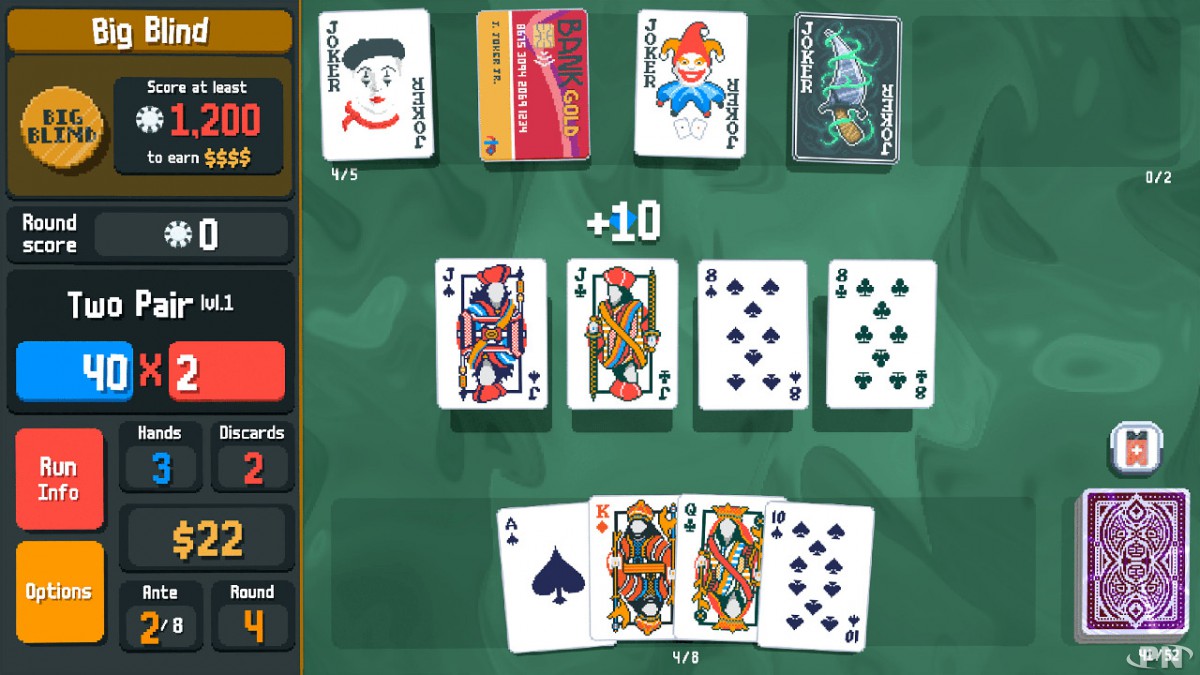
When I was a student, I had a lot of time, so I played a lot. My two favorite genres were RPGs and adventure games. Now, I spend more time creating games than playing them. So I can no longer play games that require a significant time investment. Instead, I play games that allow for quick sessions, such as Balatro, Backpack Battles, or Solitaire. These are games that allow you to have fun in 10 minutes.
Do you remember your first experiences with video games? How old were you, and what were the first video games you played and your first consoles?
My earliest memories as a gamer date back to a time when there were small candy stores that sometimes had arcade machines. The game I liked the most back then was Galaxian. I was in elementary school at the time, and of course, that was when the Famicom came out, and I played Xivius a lot. Then the Dragon Quest craze hit, and RPGs started to become hugely popular. I was completely crazy about Dragon Quest.
So you experienced the long lines when new Dragon Quest episodes came out?
At that time, I was in middle school and exams were starting, so I had to wait until I finished them to get the game. […] I remember there were people who left the store after getting their Dragon Quest, only to have their game snatched away by thugs.
Let's go back to your career at NIS. You worked your way up at NIS and participated in your very first game in 1998: Rhapsody, as a scriptwriter and producer, is that right?
Yes, two years after joining NIS, Rhapsody was my first project. I had many roles on that project, from planning to scriptwriting and even marketing. I really wore many hats on that game.
In fact, when I joined, NIS was a very small company. There weren't even ten employees. At first, I was making puzzle games, but while working in marketing, I realized that they weren't selling. So one of my first impressions at the time was that this company was going to go bankrupt pretty quickly. So I went to see the boss at the time and told him that since we were on our last legs, he should give me free rein to make an RPG, and we'd see what happened.
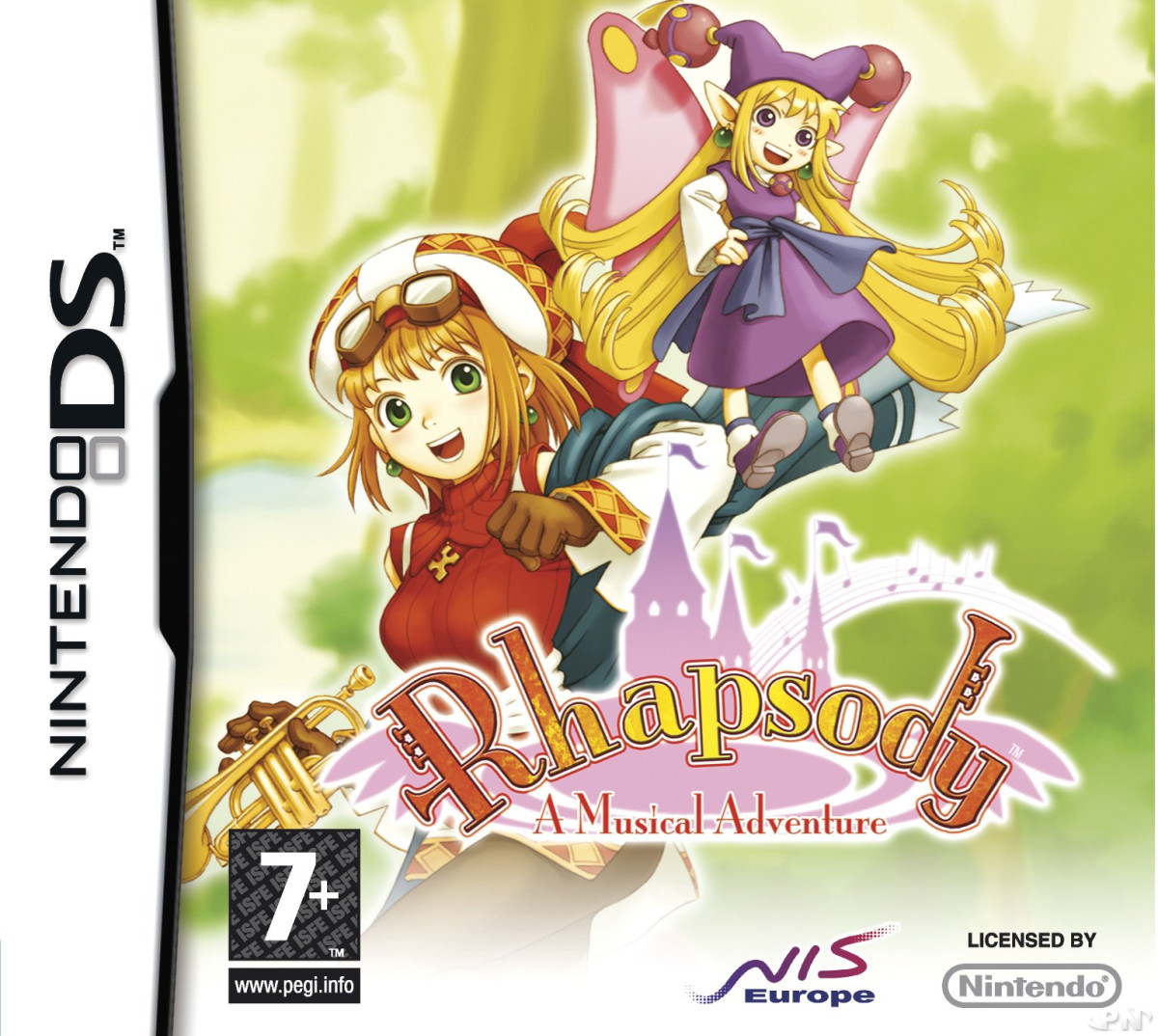
He agreed, and so the development of Rhapsody began. In fact, the person I created Rhapsody with, Yuichiro Kitao, left NIS after the development of Rhapsody to join tri-Ace, the developers of Valkyrie Profile and Star Ocean for Square Enix. He is now the founder of Gemdrops, the company developing Etrange Overlord. I stayed at NIS much longer, where I was able to develop Disgaea and other games.
This collaboration goes back a long way, and I am fortunate to have this friend who came to me to help develop this game. One of the little secrets of Etrange Overlord is precisely this connection we had from the beginning, which was important, and I think I can say that this project would never have seen the light of day without it.
Rhapsody has a very different tone from Disgaea: more musical, more "fairytale-like." Did this project allow you to explore a side of yourself that Disgaea couldn't express?
Indeed, the two series are completely different games, and I see Rhapsody as a much more accessible game, especially for female audiences, as they will find it easier to immerse themselves in this universe.
The Disgaea series is based on much more complex mechanics, a storyline aimed more at men, and a darker universe. These are two very distinct universes, and yet I feel that with Etrange Overlord, I have managed to somehow merge the two genres in a way that appeals to both audiences.

Do you ever plan to return to a "fairy tale" universe, without necessarily referring to a target audience, perhaps a fairy tale that turns into a nightmare to continue mixing the two?
Actually, yes, I'm currently working on a universe similar to a fairy tale. However, it's still in the script stage, intended more as a novel, and then we'll see if a publisher wants to take it on as a game. But in any case, it will be released as a book first, before becoming a game.
Between "Cherie Espoir," Cornet's mother in Rhapsody, GrimGrimoire, even "SuperNiche," the name of your company, and 'Etrange' in "Etrange Overlord," I get the impression that you particularly like the French language. Does this fascination come from your personal culture (literature, cinema, French comics), or is it simply the appeal of a language that sounds "exotic" and elegant to Japanese ears?
It's more the latter.
I believe this is at least your third visit to France (JPE2018, NIS 2023, NIS 2025). Do you enjoy coming to France? What do you like about it? Do you enjoy traveling in general?
I think this is my third or fourth time, actually. I particularly enjoy the French countryside, but since I'm a big foodie, I also eat very, very well in France. Yesterday I got to try escargots... and wine, of course!
After Rhapsody, you worked on Disgaea and its various episodes and became president of NIS. You left that position in 2022, according to several websites, for "personal reasons." Would you be willing to tell us more about the reasons for your departure?
Yes, let's take things in order. I worked at NIS for 26 years, the last 13 of which as CEO. But even as CEO, I still had the opportunity to participate in the creation of games and therefore to give my opinions and influence many things. But what happened was that once I reached a certain age, people around me told me that if I, as CEO, continued to work on my games, it would become an obstacle for young people and new recruits to progress internally and become independent, because as I was managing the creative side and I was the boss, the younger ones didn't dare come to me with suggestions. The restraint they showed was not a positive thing.
That's why I stepped back completely to let younger people take over and give them the chance to try their hand at something new, just like I did when I created Rhapsody. I was allowed to grow within the company, and I wanted to step aside to give others more freedom.
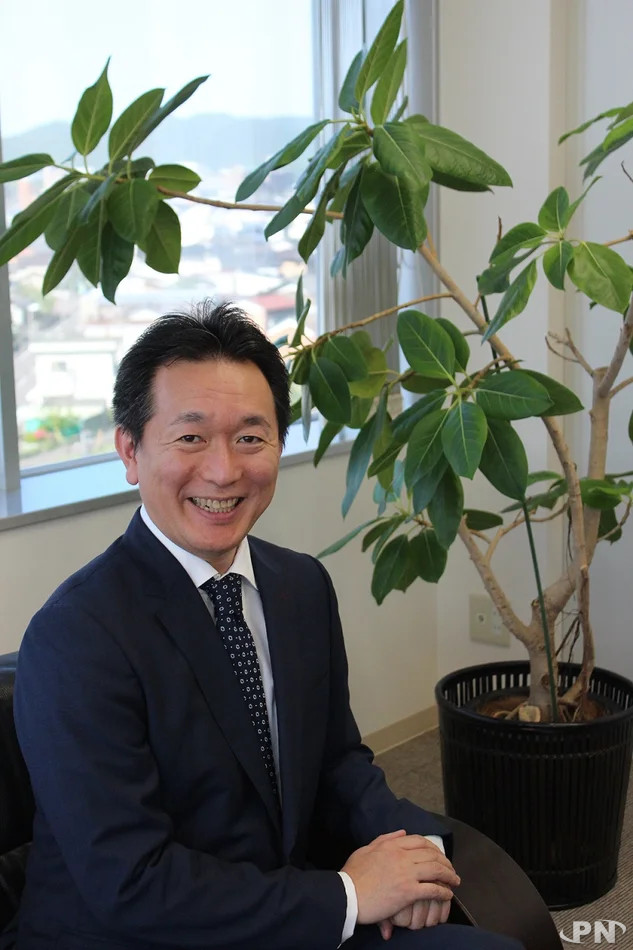
When I turned 49, I realized that my place was no longer there. As I approached my fifties, I told myself that I had two options: either I could keep my position as CEO, while restricting myself so as not to get involved in the creative side of things, among other things, or I could decide to turn the tables and start all over again from scratch. The latter option became more and more appealing as time went on, and I really wanted to continue creating lots of things until the end of my life, which is what motivated me to leave the company.
Once I had taken that step, I decided to work under a pseudonym for several reasons. The first was that by proposing new projects immediately after my departure, with a style that could be similar to what NIS and I had done together, there was a risk of conflict. So I preferred to start out as a writer. But using a pen name gave me the opportunity to challenge my abilities without taking advantage of the aura surrounding my name, which I had earned through my years at NIS. It allowed me to see what I was capable of under a name that no one knew.
I am extremely grateful to Nippon Ichi Software, which helped me grow for 26 years. That's where I learned everything. So I am extremely happy to see NIS America collaborating with me on this new game, into which I have put everything I have. It's a great pleasure for me.
Do you have any advice for anyone who wants to become an independent creator?
If I had to give one piece of advice, it would be: go for it and create! Until you start creating, you can't progress. And if I could give one piece of advice to all bosses and decision-makers, it would be: give them a chance! When you see that there are more and more big AA or AAA titles compared to smaller projects, you realize that the people working on them are only involved at the end of the decision-making chain. It's teamwork, it's exciting, but on these kinds of projects, creative decisions are usually concentrated in the hands of a small number of people. The others don't have the opportunity to fully express what they think. That's why it's important to have lots of small, less ambitious games that allow young creators to express themselves, propose new ideas, and help the video game industry evolve. I believe that the best way to learn is to experiment for yourself as a creator.

When it comes to humor, like the kind found in Disgaea, what are your limits for deciding which jokes to include and which to leave out?
It depends on the person, but as far as I'm concerned, I don't set any limits. As long as it's funny and interesting, go for it. On the other hand, if something similar has already been done, there's no point. So I try to create something interesting that I think only I can create. The only "censorship" or limit I might impose on myself is not to hurt people.
Speaking of censorship, I read in an interview (Journal du Japon) that in the first Disgaea, one of the possible weapons is… a horse's genitals. How does such an idea even come up? Is it because of the final ingredient of the recipe (alcohol)?
The demon boy was trying to assemble all the best parts to make the ultimate zombie, and the horse's member was the finishing touch. It's a well-known fact that horses are among the most well-endowed creatures on the planet, so it was less an "idea" and more of a foregone conclusion.
How do you see the impact of digitization, which is happening at the expense of the physical market?
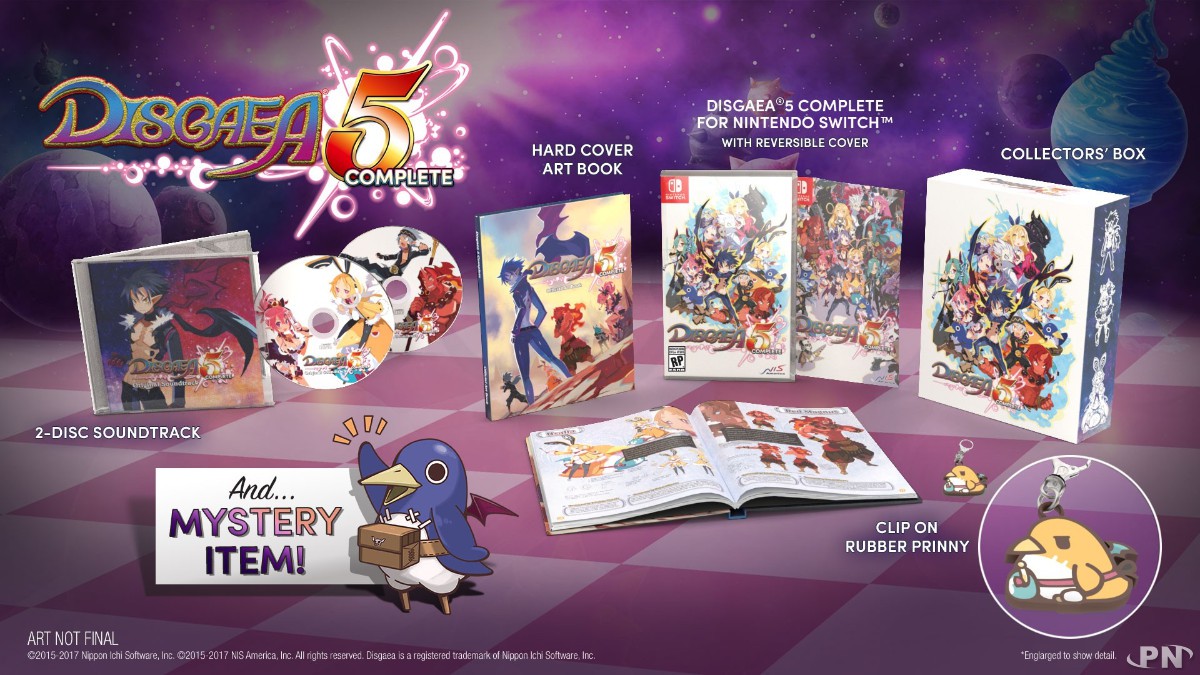
As far as the digitization of the industry is concerned, I think it's in keeping with the times. It's more practical than in the days when we had to change cassettes to switch games. It saves players the trouble of doing that. So the phenomenon is the result of demand. On the other hand, I'm still convinced that many gamers will continue to want physical versions with collector's editions because there's an emotional attachment to the game, so I don't think it will disappear completely.
As a creator who has seen the industry evolve, how do you view the gradual rise of artificial intelligence?
As far as I'm concerned, I think we absolutely must stop using anything that is protected by copyright. On the other hand, I am very positive about the automation of tasks that don't really add value, so that we, as human beings, can devote ourselves to other aspects. From this point of view, I think it is useful, but we need to distinguish between two things. We cannot be completely critical of AI because we need to distinguish between productivity gains and respect for copyright. If these two aspects are respected, it can be a good tool.
My next question is in several parts:
- In a previous interview (journaldujapon), you said that you are unable to write serious scenarios and that this sets you and NIS apart from the big RPG companies.
- In that same interview, you said that to come up with the storyline for the first Disgaea, you put all the team's ideas in a bag and mixed them up to get something.
- Normally, at this stage, you already have something, but if you need to force fate a little, during the 2018 Japan Expo where you gave a talk, you admitted that you had to add alcohol. (Yes, I've read a lot of things.)
- So that's the famous magic recipe: a bag, ideas, mix it all together, and if necessary, a little alcohol in DLC?
So lately, I haven't been drinking alcohol! When I left the company, I freed myself from a lot of things and felt much freer. I had a lot of ideas at the same time. So maybe I'm a little less crazy than before, but I still mix ideas together, although I try to adapt them to the world I want to create without throwing in a bit of everything and anything like I used to. I try to frame my ideas, without depriving myself, to keep a little bit of madness.
Do you have one or two anecdotes about ideas you found too crazy even for Disgaea?
Every time I work on a game, I put all of my ideas into it without ever abandoning anything. I always go all-out!
Etrange Overlord
Note: The interview was a long and (very) enjoyable conversation, but we were cut short by the clock. Mr. Niikawa then invited us to send him the rest of our questions by email. These questions concerned Etrange Overlord, the new game he was presenting to us.
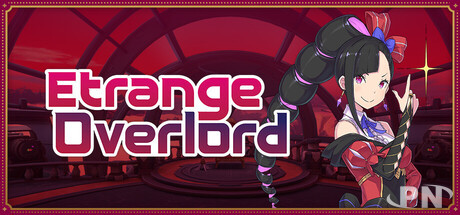
Is there a little story behind how the game's concept came to you and how its characters were created? What was the starting point?
In a bog-standard version of this story, things would play out with the protagonist dying, reincarnating, regretting their old ways, and trying to live a better life; but my job is to take those standard, common sense ideas and put them under a spotlight, so Etrange was born from me wanting to explore a character that, even after dying, didn't regret anything about how they lived their life and had no intention of changing.
If I'm not mistaken, your games were mostly in 2D until now, and Etrange Overlord takes the step into 3D. In a previous interview (Journal du Japon), you said about 3D: "I honestly wonder whether making a 3D Disgaea with very realistic characters would find buyers." This isn't a Disgaea game, but what pushed you to move from 2D to 3D? Was it the change of franchise that made this possible, or simply the gameplay that led you in that direction?
There are a number of different things that determine whether or not you develop a game in 2D or 3D. One consideration would be which one is a better fit when it comes to expressing the game mechanics. Another would be whether it's a good fit for how we want to express the story and the characters. And finally, you have to think about which format the team is most adept at handling. So we then have to consider all of these things at once and pick the best option. In the case of Etrange, given its game mechanics, the musical sequences, and the team involved (Gemdrops), we decided 3D would work best all across the board.
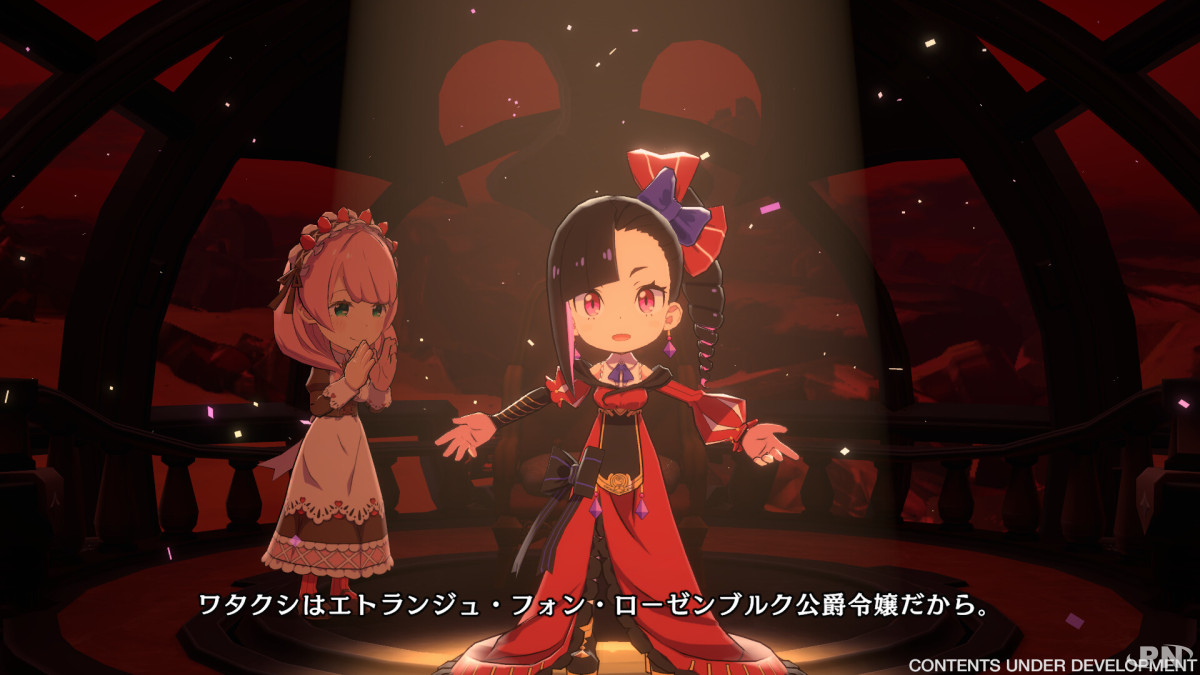
Did the switch to 3D create any unexpected narrative or technical challenges? For example, did you have to rethink how humor or gameplay mechanics are expressed in 3D?
There weren't really any unexpected issues, no. I had already finished writing the web novel beforehand, so everything had already been anticipated. If anything, the switch to 3D allowed us to be much more expressive with the musical sequences than we had been in past works like Rhapsody, so I was quite pleased with it.
For this project, you worked with Gemdrops and Broccoli. How did the collaboration with these studios go? Did you have to adapt your writing style or direction for this project?
We knew what each company's strengths were going in, and were able to utilize them to our advantage as we worked on the project. For example, Gemdrops is really good at developing games with a heavy emphasis on action, so that's where the revolving lane action gameplay came from. Broccoli's strength lies in their composers and voiceover talent, which gave us a plethora of options when it came to casting.
As with Rhapsody, which I mentioned earlier, music seems to play a full-fledged role here, and I noticed that sung moments appear quite regularly. How did you approach this aspect compared to your previous games?
I think, by virtue of the game being in 3D, it made me approach the musical sequences with a much broader range of expression than I did in the past.
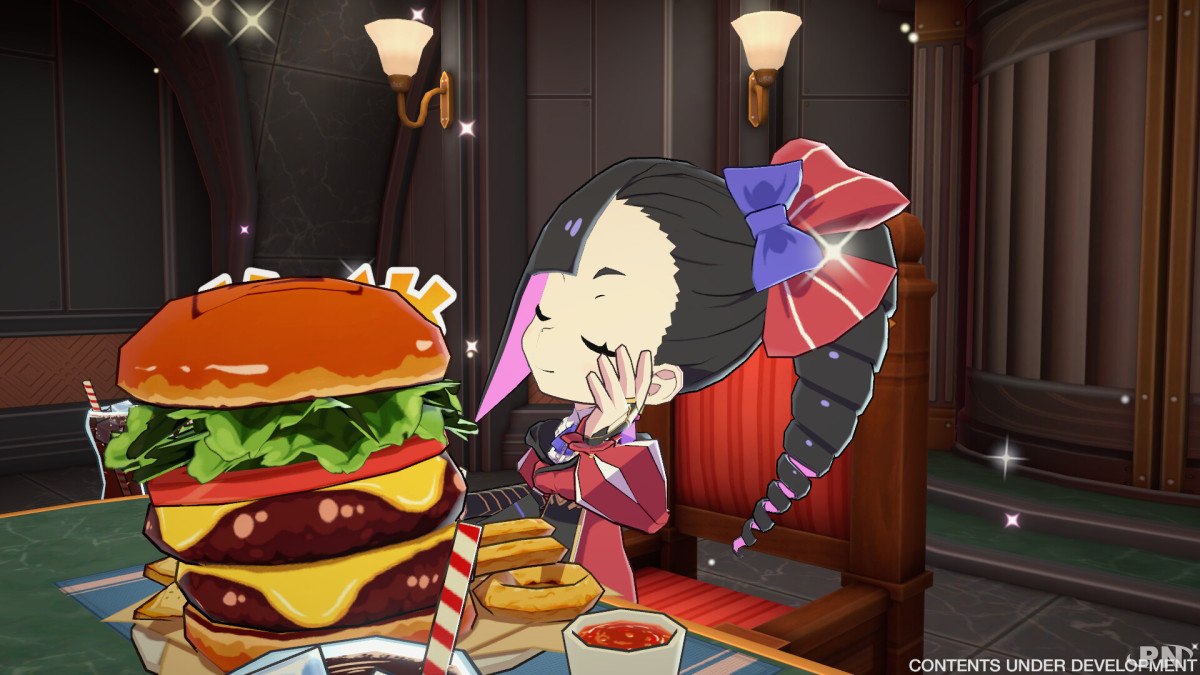
As you said, Rhapsody targeted a broader and more feminine audience, while Disgaea was aimed at a more hardcore and masculine one. Where would you place Etrange Overlord? I feel it is closer to Disgaea, but takes a step toward Rhapsody beyond the musical aspect.
Really, we're just targeting anyone who might look at the game, think that it's interesting, and want to play it. That said, with the game having a female protagonist, an abundance of musical scenes, gameplay mechanics that are less complicated than Disgaea, and being very easy to pick up and play in short bursts, I do expect it to be more appealing to women than Disgaea was.
Just like the musical element, I get the impression that the multiplayer aspect required more thought than in your previous projects. Is that correct, and why did you choose to include this option?
The idea for multiplayer came out of everyone wanting to try and make it happen after playing around with the revolving lane mechanic during development. However, we didn't actually have the budget for it. So the fact that it's included at all is because of Gemdrops going above and beyond.
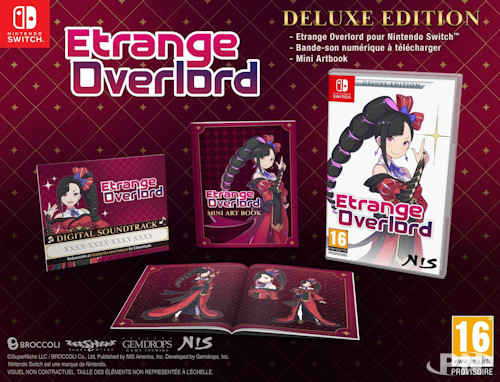
This interview is now over. We would like to thank Mr. Niikawa for taking the time to speak with us, as well as Doriane Iop from Kickpush Agency for organizing this event, and the help from the team of NIS America.
- « Page précédente
- Page suivante »


Cet article vous a intéressé ? Vous souhaitez réagir, engager une discussion ? Ecrivez simplement un commentaire.